
AI is transforming digital apprenticeships in the UK by tailoring learning experiences to individual needs. These programmes, which combine work experience with education in areas like IT, data, and marketing, are vital for addressing the UK’s digital skills gap. However, traditional models struggle with varying learner needs and engagement levels. AI solves this by:
- Customising learning paths: AI adjusts content difficulty and delivery based on each apprentice’s progress and preferences.
- Providing instant feedback: Tools like generative AI simulate real-world scenarios for safe skill practice.
- Supporting tutors: AI automates repetitive tasks, freeing tutors to focus on mentorship and complex challenges.
- Increasing accessibility: Features like speech-to-text and 24/7 support help learners with additional needs.
Results include higher engagement, improved test scores, and better retention rates. Programmes like those from NowSkills demonstrate how AI integration can prepare apprentices for in-demand tech roles while delivering measurable business value.
AI is not a replacement for tutors but a tool to enhance their impact. Balancing technology with human support ensures effective, inclusive, and secure apprenticeship experiences.
How AI-Driven Personalised Learning Works
How AI Identifies Individual Learning Needs
AI starts by gathering and analysing data from various sources to create a detailed profile of each apprentice’s learning journey. This includes factors like quiz scores, assessment results, time spent on tasks, completion rates, and even behavioural patterns – such as how frequently learners engage with materials or participate in discussions. By combining this data, AI can identify skill gaps, learning preferences, and areas where extra support is needed.
For instance, if the AI notices uneven performance across different modules, it adjusts the learning resources to address those weak spots. It also tracks which content formats – like videos, articles, or interactive exercises – lead to better outcomes for each individual. This means the system can prioritise the formats that resonate most with the learner, moving beyond a one-size-fits-all approach. Personalisation here isn’t just about matching content to difficulty levels; it’s about adapting how that content is delivered to suit each apprentice’s unique learning style.
This in-depth learner profiling paves the way for advanced adaptive technologies to step in.
Technologies Behind AI Personalisation
Several technologies power these personalised learning experiences, including adaptive platforms, real-time dashboards, and generative AI tools.
Adaptive learning platforms are at the heart of it all. These platforms use machine learning algorithms to adjust lesson difficulty and pace in real time. By continuously analysing learner performance, they ensure that the curriculum remains appropriately challenging without becoming overwhelming.
Data dashboards bring clarity for both learners and tutors. These dashboards provide real-time insights into progress, engagement, and skill development. Learners can see exactly where they stand in relation to their goals, while tutors can quickly identify who might need extra help. This level of visibility allows for timely interventions and ensures that support is both targeted and effective.
Generative AI assistants are becoming indispensable tools in everyday learning. Platforms like EDUKATE.AI and tools such as Microsoft 365 Copilot provide on-demand support by explaining concepts, generating practice questions, summarising complex topics, and offering personalised feedback. This instant assistance empowers learners to move forward without delays, enabling them to tackle challenges at their own pace.
Continuous Monitoring and Adjustment
What sets AI-driven personalised learning apart is its ability to continuously monitor progress and make real-time adjustments. Unlike traditional models, where assessments are periodic and changes take time, AI tracks performance as it happens and responds instantly to emerging patterns.
If an apprentice is struggling, the AI immediately provides additional resources or simplifies the content. On the other hand, learners who excel are presented with more advanced material to keep them challenged and engaged. In fact, a 2023 study found that AI-personalised training doubled engagement levels compared to conventional methods.
This dynamic system has shown impressive results. Apprentices using AI-driven programmes saw a 62% improvement in test scores, thanks to the system’s ability to tailor both the complexity and pace of lessons to individual needs. The continuous feedback loop ensures that learning paths remain aligned with each apprentice’s evolving goals and progress throughout their programme.
AI also spots trends that might go unnoticed by human tutors. For example, if several apprentices struggle with the same topic, the system flags this, suggesting that the content might need adjustment or that additional teaching resources should be created. This not only benefits individual learners but also helps improve the overall programme.
Despite the advanced capabilities of AI, tutors remain essential. They provide mentorship, emotional support, and context that technology simply cannot replicate. Tutors also play a critical role in training AI systems, curating content, and defining mastery standards to ensure the technology aligns with industry requirements and best practices.
Benefits of AI-Personalised Learning in Digital Apprenticeships
Better Learner Engagement and Retention
When training feels tailored to an apprentice’s unique needs, they’re far more likely to stay engaged and complete their programme. AI-driven personalisation makes this possible by customising both the content and its pacing. Learners are neither overwhelmed by material that’s too advanced nor bored by content that’s too basic.
The results speak for themselves. Research highlights a 70% boost in engagement and a 15% increase in graduation rates when learning is personalised. This approach not only keeps learners motivated but also strengthens their commitment to completing their training. Recognising individual progress plays a key role in this – when learners feel supported and acknowledged, they’re more likely to stay the course.
AI also acts as an early-warning system, identifying when learners are beginning to disengage. This allows tutors to step in before small challenges turn into major setbacks, ensuring that no one is left behind.
Improved Accessibility and Inclusion
AI tools are breaking down barriers in digital apprenticeships, making learning more inclusive. Features like speech-to-text, adaptive content formats, and 24/7 support ensure that apprentices with additional needs can fully participate. For example, individuals with dyslexia, ADHD, or other neurodivergent conditions can benefit from text-to-audio conversion, simplified explanations, or visual aids like diagrams. This flexibility allows learners to engage with materials in ways that suit their preferences and needs.
Round-the-clock AI support, delivered through chatbots and virtual assistants, ensures help is available whenever it’s needed – even outside traditional working hours. Advanced platforms also adapt continuously to learners’ interactions, creating personalised pathways that cater to a wide variety of learning styles.
Beyond making training more accessible, AI also equips tutors with tools to provide highly personalised support, ensuring all learners have the opportunity to thrive.
Efficiency and Support for Tutors
AI doesn’t replace tutors – it enhances their ability to offer meaningful, focused support. By automating repetitive tasks like grading, progress tracking, and report generation, AI frees up tutors to concentrate on more complex questions and provide tailored coaching. Tools like AI-powered dashboards help tutors quickly identify which apprentices are struggling with specific topics, enabling timely and targeted interventions.
The impact is tangible. In one example, the introduction of AI tutoring saw students improve their grades by an average of 15 points, with class participation increasing by 50% in just one semester. This combination of automated assistance and detailed insights allows tutors to maintain high-quality support, even as apprenticeship programmes grow in size. According to research from McKinsey, AI-driven adaptive learning environments can enhance educational outcomes by 20% to 50%, particularly benefiting underserved communities.
AI Applications in UK Apprenticeship Programmes
AI in Onboarding and Programme Matching
Getting apprentices started on the right programme is a critical step towards their success. In the UK, AI is reshaping how providers manage this process by automating assessments and analysing Individual Learner Record (ILR) data. This technology helps match candidates with apprenticeships that align with their skills, interests, and career goals. Private large language models (LLMs) process ILR data in real time, spotting inconsistencies and identifying learners who may need additional support. By flagging potential challenges early, providers can step in with tailored resources or mentoring before issues grow.
AI also simplifies administrative tasks like enrolment, paperwork, attendance tracking, and progress monitoring. With these processes automated, providers can dedicate more time to supporting apprentices and ensuring their success.
AI Tools Supporting Day-to-Day Learning
Once apprentices are enrolled, AI continues to play a vital role in their daily learning. Personalised dashboards track progress in real time, highlighting achievements and areas requiring attention. AI-driven systems send reminders and prompts tailored to deadlines and individual progress, helping apprentices stay organised and manage their workload effectively. For diverse groups, multilingual assistants ensure everyone can fully participate in their training.
Generative AI takes learning a step further by offering simulations for skill practice. Apprentices can engage in realistic scenarios – like virtual customer interactions, data analysis tasks, or digital marketing projects – within a safe, controlled environment. Intelligent tutoring systems and chatbots guide learners through complex problem-solving by modelling expert approaches, offering adaptive prompts, and providing immediate feedback. For instance, a data analytics apprentice might practise interpreting datasets and presenting findings to virtual stakeholders while receiving real-time feedback tailored to their performance.
These tools don’t just benefit learners; they also reduce the administrative load on tutors. Tasks like marking, timetabling, and budget management are automated, allowing staff to focus on curriculum planning and one-on-one mentoring.
The NowSkills Approach to AI-Enhanced Training
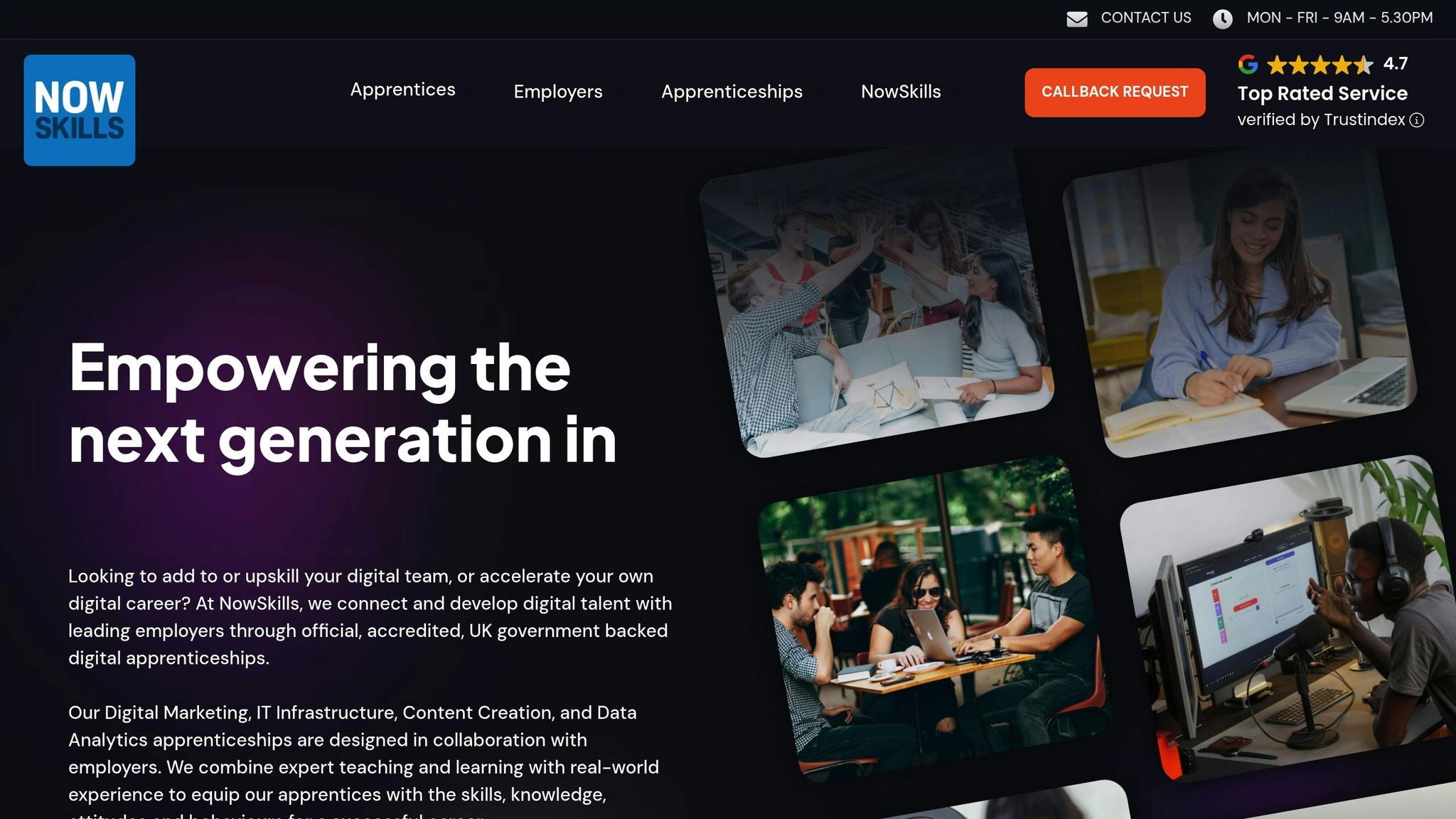
NowSkills offers a compelling example of how integrating AI into apprenticeship programmes can deliver strong results. Their accredited apprenticeships in Digital Marketing, IT Infrastructure, Content Creation, and Data Analytics combine AI-driven personalisation with the human support apprentices need to thrive.
AI tools are embedded directly into their curricula. For example, the Multi-Channel Marketer with Artificial Intelligence Tools Level 3 Apprenticeship and the Content Creator with Artificial Intelligence Tools Level 3 Apprenticeship not only teach apprentices about AI but also provide hands-on experience with tools used in the industry. This practical focus ensures apprentices develop skills that employers find immediately useful.
NowSkills also uses AI to match apprentices to roles, monitor their progress, and offer tailored support. This approach addresses the limitations of traditional apprenticeship models by aligning technical training with personalised guidance. By collaborating with employers to design their programmes, NowSkills ensures that apprentices gain technical expertise, develop professional behaviours, and build the confidence needed for careers in fast-changing digital industries.
The impact of this strategy goes beyond individual learners. Reports suggest that apprentices equipped with AI and data skills have contributed over £300 million in business value. This success highlights the effectiveness of combining AI-driven personalisation with expert coaching and real-world projects. Together, technology and human support create a powerful framework for training the next generation of skilled professionals.
sbb-itb-3297dc6
Key Considerations for Implementing AI in Apprenticeships
Data Privacy and Compliance with UK Regulations
When integrating AI into digital apprenticeships, safeguarding data must be a top priority. Compliance with UK GDPR and the Data Protection Act 2018 is essential to protect sensitive information, such as assessment results and personal learning needs. Beyond legal obligations, this ensures a secure environment for apprentices’ data.
Obtaining informed consent is a critical step. Apprentices need to know exactly what data is being collected, how it will be used, and who will have access. Clear communication fosters trust and ensures learners are aware of their rights. At the same time, data collection should be limited to what is strictly necessary for personalised learning – no more, no less.
Before rolling out any AI tool, conducting a Data Protection Impact Assessment (DPIA) is a smart move. This process identifies potential risks in how data flows through the system, highlights vulnerabilities, and pinpoints areas that need stronger safeguards. Providers working with government-funded apprenticeships should also confirm that third-party AI vendors meet UK regulatory standards. For organisations handling large volumes of learner data, appointing a Data Protection Officer (DPO) may be a legal requirement.
Strong security measures are non-negotiable. Encryption, secure access controls, and regular audits help guard against breaches. Staff must be trained in proper data-handling procedures, and apprentices should have access to clear privacy notices. Providers should also be prepared for regulatory audits and ensure ongoing compliance with bodies like the Information Commissioner’s Office (ICO).
Balancing AI and Human Support
AI is excellent at processing data and delivering tailored content, but it can’t replicate the human connection vital to apprenticeships. The best approach combines AI’s efficiency with the empathy and insight that tutors bring to the table. By working together, AI and human tutors can create a more effective learning environment.
AI can identify learning gaps and offer adaptive feedback, but it lacks the ability to interpret emotional or social cues. This is where tutors step in. By reviewing AI-generated insights, they can spot issues that technology might miss and provide timely support.
A hybrid model works well when roles are clearly defined. AI can handle repetitive tasks like grading, tracking progress, and sending reminders, freeing tutors to focus on more valuable activities. These include curriculum planning, mentoring, and addressing complex learning challenges.
This balance also helps address ethical concerns. Human oversight ensures that AI-generated recommendations are appropriate and unbiased. Tutors can step in when needed, offering collaborative problem-solving opportunities and real-world context that prepare apprentices for workplace challenges. The goal is not to reduce human involvement but to use AI as a tool that enhances what tutors already do best – teaching, mentoring, and inspiring learners.
Ensuring Accessibility and Staff Training
Once data protection and the balance between AI and human support are established, the next step is ensuring AI tools are accessible and that staff are equipped to use them effectively. AI platforms should meet accessibility standards like Web Content Accessibility Guidelines (WCAG) 2.1, ensuring every apprentice can engage with the tools, regardless of disabilities or additional needs. Features like adjustable font sizes, colour contrast options, and multimedia content (text, audio, video, and interactive elements) make a big difference.
Compatibility with assistive technologies is equally important. Tools like screen readers and voice recognition software must integrate seamlessly with AI platforms. Involving apprentices with diverse needs in user testing ensures the system works for everyone, not just the majority.
Staff training is just as crucial. Tutors and support staff need structured programmes covering both the technical and instructional aspects of AI tools. They should learn how to interpret AI insights and apply them in their teaching. Confidence in using these tools comes from understanding not just how they work but how they can improve learning outcomes.
Training should include practical scenarios. For example, what should a tutor do when AI flags a struggling learner? How should they handle situations where an AI recommendation doesn’t seem right? Peer learning communities can also be a valuable resource, allowing staff to share experiences and strategies. Access to expert guidance – whether from internal teams or external organisations – can help address challenges as they arise.
Regular monitoring is key to keeping AI systems effective and accessible. Feedback from apprentices and staff can highlight what’s working and what needs adjusting. Tracking metrics like engagement, completion, and satisfaction rates can measure the impact of AI tools. Policies should evolve in response to regulatory changes and best practices, and some providers even bring in external auditors for independent assessments.
Starting small with pilot projects is a smart way to test AI tools before full deployment. Involving stakeholders – learners, tutors, and employers – in the design process ensures the technology meets actual needs. Clear success metrics help evaluate whether the AI system is delivering as expected, while transparent communication builds trust and sets realistic expectations for everyone involved.
AI, Skills, And The Future Of Apprenticeships | Idris Fabiyi, BPP Education Group
Conclusion
AI is reshaping digital apprenticeships by tailoring learning experiences to suit individual needs. By creating personalised learning paths that adjust to each apprentice’s pace, programmes using AI-driven approaches have achieved impressive outcomes. For instance, 91% of apprentices are retained by their employers, and organisations see a typical return of 147% for every pound invested in apprenticeships.
This tailored learning approach benefits everyone involved. Apprentices gain a more accessible and inclusive experience, with content adapted to diverse learning styles and real-time support available when needed. At the same time, tutors can focus on providing deeper mentorship and addressing complex challenges, creating a more engaging and supportive environment for learners and employers alike.
Real-world examples illustrate the tangible impact of AI in this space. Cambridge Spark’s data and AI apprenticeships, for instance, have generated over £300 million in business value, with apprentices applying their newly acquired skills directly to their roles. These numbers demonstrate not just the educational benefits but also the broader economic value AI brings to the UK.
Leading providers are at the forefront of this transformation. Take NowSkills, for example, which integrates AI tools into its accredited digital and IT apprenticeship programmes. By combining expert teaching, hands-on experience, and AI-driven support, they’re helping to bridge the digital skills gap and prepare both learners and employers for the demands of a rapidly changing digital economy.
Looking ahead, the role of AI in digital apprenticeships is only set to grow. Success will depend on maintaining a balance between advanced technology and human support, ensuring compliance with UK data privacy regulations, and making AI tools accessible to all learners. When applied thoughtfully, AI has the potential to complement human expertise, creating apprenticeship programmes that are not only more effective but also more inclusive.
FAQs
How does AI make learning in digital apprenticeships more personalised and effective?
AI brings a new level of personalisation to digital apprenticeships by adapting learning paths to suit each apprentice’s unique skills, needs, and progress. By analysing performance data, it pinpoints strengths and areas needing improvement, enabling tailored content and focused support.
This personalised approach boosts engagement and helps apprentices achieve stronger results by concentrating on the aspects most crucial to their growth. With AI-powered tools, apprentices can progress at their own pace, making the learning experience far more effective and fulfilling than traditional, uniform methods.
How does AI ensure data privacy and compliance in digital apprenticeships?
AI systems supporting digital apprenticeships come equipped with strong data privacy and compliance safeguards to keep sensitive information secure. These safeguards often include features like data encryption, secure storage solutions, and strict access controls, ensuring that personal data is only accessible to authorised individuals.
Moreover, these AI platforms are designed to comply with UK data protection laws, including the General Data Protection Regulation (GDPR). This guarantees that data is managed transparently, securely, and with the consent of those involved, offering protection for both apprentices and organisations.
How do AI tools enhance the role of tutors in digital apprenticeship programmes?
AI tools work alongside tutors to create tailored learning experiences that align with each apprentice’s unique strengths, challenges, and progress. This frees up tutors to concentrate on mentoring and providing one-on-one support, rather than getting bogged down with repetitive tasks like marking or monitoring progress.
On top of that, AI-driven analytics can pinpoint areas where apprentices might be having difficulties, giving tutors the chance to offer focused guidance. By handling routine admin work and offering deeper learning insights, AI enables tutors to provide training that’s both more efficient and engaging.


