
Content creation software is crucial for digital apprenticeships, providing hands-on experience with tools used in professional settings. These platforms help apprentices build portfolios, work on industry-relevant projects, and gain practical skills while learning. Here’s a quick overview of four popular tools used in UK apprenticeship programmes:
- Camtasia: Ideal for video editing and screen recording, with interactive features like quizzes. Works well for technical demonstrations but has a learning curve.
- Canva: A simple, drag-and-drop design tool for graphics, presentations, and videos. Great for beginners but lacks course management features.
- Thrive Apprentice: A WordPress plugin for creating structured online courses. Offers flexibility but requires WordPress knowledge.
- Teachable: A standalone platform focusing on course delivery and automation. Easy to use but limited in customisation and real-time collaboration.
Each tool has unique strengths and limitations, making the choice dependent on your programme’s needs, technical setup, and budget. Below is a comparison to help you decide.
Quick Comparison
| Software | Best For | Main Drawbacks | Annual Cost (GBP) | Key Features |
|---|---|---|---|---|
| Camtasia | Video editing and interactive content | Steep learning curve, higher cost | ~£145 | Screen recording, quizzes, integrations |
| Canva | Visual content creation | No course management tools | Free/~£100 | Templates, real-time collaboration |
| Thrive Apprentice | Structured course creation | Requires WordPress knowledge | ~£150 | Modular courses, WordPress integration |
| Teachable | Automated course delivery | Limited customisation | ~£330 | AI tools, email marketing, forums |
Choosing the right platform ensures apprentices gain valuable experience while producing work that aligns with industry expectations. Test options to find the best fit for your goals and budget.
7 Best Online Course Creation Platforms in 2025 | Teachable vs. Thinkific vs. Kajabi vs. Podia
1. Camtasia
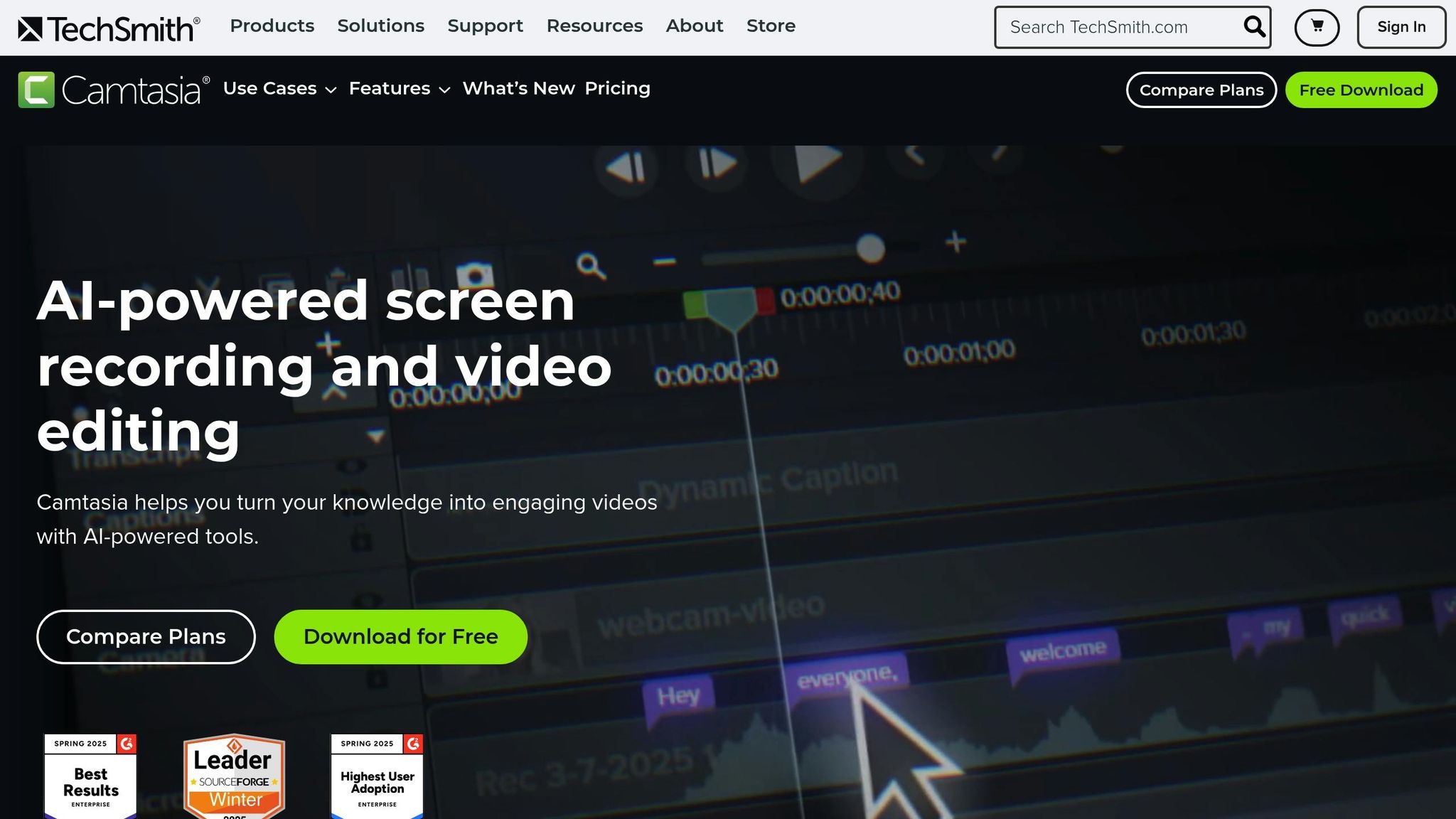
Camtasia is a versatile tool designed for creating videos that enhance digital apprenticeships. It combines screen recording and video editing, allowing users to produce detailed content that blends theoretical concepts with practical demonstrations through simultaneous screen and voice recordings.
Supported Content Types
Camtasia supports a variety of content formats, including video tutorials, screen recordings, interactive videos with quizzes and hotspots, voiceovers, and presentations. Recent updates have added AI-powered features like image generation, background removal, and natural-sounding script and voice creation. These tools simplify the content creation process and make it easier to produce engaging, interactive learning materials that integrate smoothly with other digital platforms.
Integration with Tools
Camtasia’s integration capabilities are another highlight. It works seamlessly with Microsoft PowerPoint, enabling trainers to record presentations directly – an ideal feature for apprenticeship programmes that combine traditional slide decks with interactive video content. The software also supports exporting content to platforms like YouTube, Vimeo, and Google Drive. Additionally, it allows media imports from various sources, making it compatible with popular learning management systems and enabling direct embedding into apprenticeship frameworks.
Collaboration Features
Collaboration is made easier with Camtasia’s project-sharing options, templates, and asset libraries. These features help training teams ensure consistent branding and streamline updates across multiple apprenticeship cohorts. Team members can share files and assets, making coordinated content development straightforward. For organisations like NowSkills, this is especially useful, as it ensures uniform quality across programmes and trainers, supporting quality assurance efforts.
UK-Specific Pricing
Cost is always a factor for apprenticeship providers, and Camtasia’s pricing in the UK starts at around £149.99 per year for a single user licence. While this may represent a notable investment, educational discounts are often available to UK institutions and apprenticeship providers, making the software more accessible for government-funded schemes. For organisations managing larger teams or multiple trainers, volume discounts can significantly lower the cost per user. Camtasia is available for both Windows and macOS, ensuring it works across different technical setups while maintaining consistent quality in content delivery.
2. Canva
Canva is a user-friendly platform designed for creating visual content, making it a great choice for digital apprenticeships in areas like marketing and visual communication. Thanks to its simple drag-and-drop interface, even those with no prior design experience can quickly produce high-quality graphics, presentations, and videos. This ease of use makes it an excellent tool for apprentices learning the basics of content creation. Now, let’s take a look at Thrive Apprentice for online course development.
Supported Content Types
Canva supports a broad range of content formats that are essential for digital apprenticeships. Apprentices can work on social media graphics, presentations, infographics, posters, flyers, and videos, all using professionally designed templates. These templates are accessible across platforms like Windows, Mac, iOS, and Android devices.
This wide selection of tools and formats allows apprentices to grasp design principles without needing to start from scratch. It’s particularly useful for time-sensitive projects, where producing polished outputs is a priority.
Integration with Tools
Canva’s ability to integrate with other tools adds significant value to apprenticeship programmes, especially those involving multiple platforms. It works seamlessly with Google Drive, Dropbox, Microsoft Teams, Slack, and various Learning Management Systems (LMS). This makes sharing, collaborating, and embedding designs into training materials or workplace documents straightforward.
For instance, an apprentice could create a presentation in Canva and directly upload it to Google Drive for mentor feedback or import it into a Teams meeting. This kind of workflow mirrors the integrated systems used in many professional environments, giving apprentices real-world experience with industry-standard tools.
Collaboration Features
Canva’s real-time collaboration tools allow multiple users to edit, comment, and assign tasks simultaneously. These features encourage constructive feedback and foster peer learning. Mentors can review designs, suggest changes, and track progress all within the platform.
Such collaboration mirrors the workflows of professional digital agencies, helping apprentices build skills in teamwork and constructive communication – both essential for their future careers.
UK-Specific Pricing
Canva offers flexible pricing plans that cater to apprenticeship budgets. There’s a free plan with basic features, while Canva Pro costs about £10.99 per month for individual users. Team plans start at approximately £12.99 per month per user, including VAT.
For apprenticeship providers, Canva offers Canva for Education at no cost for verified teachers and students. If an apprenticeship programme qualifies as an educational provider, apprentices and their trainers can access premium features for free. This is especially appealing for government-funded programmes aiming to maximise their resources without overspending.
3. Thrive Apprentice
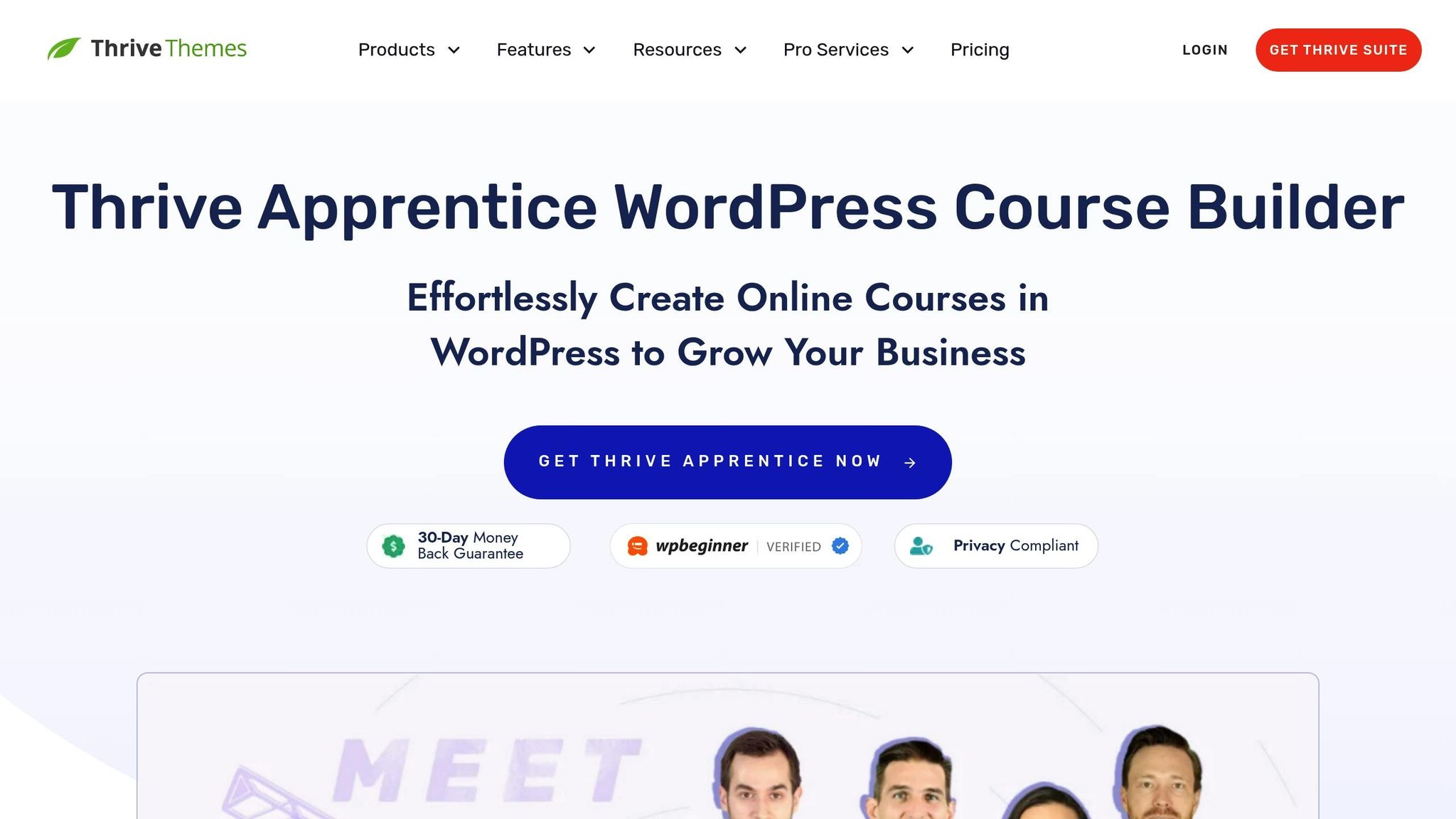
Thrive Apprentice is a Learning Management System (LMS) plugin designed for WordPress. It allows users to create, manage, and deliver online courses with ease. The platform emphasises a tailored, branded learning experience, making it ideal for apprenticeship providers. With its School Wizard visual editor, users can design courses through a simple drag-and-drop interface – no technical skills required. Let’s dive into its content capabilities, integrations, and collaborative options.
Supported Content Types
Thrive Apprentice supports a wide variety of content formats, including text lessons, videos, audio files, PDFs, downloadable resources, and external links. This range caters to diverse learning preferences, making it a versatile tool for digital apprenticeships. Courses can be organised into lessons, chapters, and modules, ensuring a clear and structured learning journey. The School Wizard simplifies setup with over 55 templates, allowing users to quickly build courses through its guided process.
Integration with Tools
Being a WordPress plugin, Thrive Apprentice works seamlessly with other tools in the WordPress ecosystem. It integrates with email marketing platforms like Mailchimp and ConvertKit, as well as membership plugins and payment gateways, streamlining enrolment and learner communication. Additionally, it pairs effectively with other Thrive Suite tools, such as Thrive Architect for building custom pages and Thrive Quiz Builder for creating interactive assessments.
Collaboration Features
While Thrive Apprentice shines in course creation and delivery, its native collaboration features are somewhat limited. It doesn’t offer advanced options like real-time co-authoring or group workspaces. However, collaboration can still be achieved using WordPress user roles, enabling multiple instructors, mentors, or assessors to manage and update course content. For those needing more robust collaboration tools, additional plugins can fill the gap.
UK-Specific Pricing
Thrive Apprentice is included in the Thrive Suite, which costs approximately £240 per year (based on the $299 annual price as of November 2025). This flat-rate pricing model can be particularly appealing for government-funded apprenticeship programmes and other educational providers, as it’s not tied to the number of users. For organisations looking for an affordable and scalable solution within the WordPress ecosystem, this investment offers a practical way to enhance course creation and delivery.
sbb-itb-3297dc6
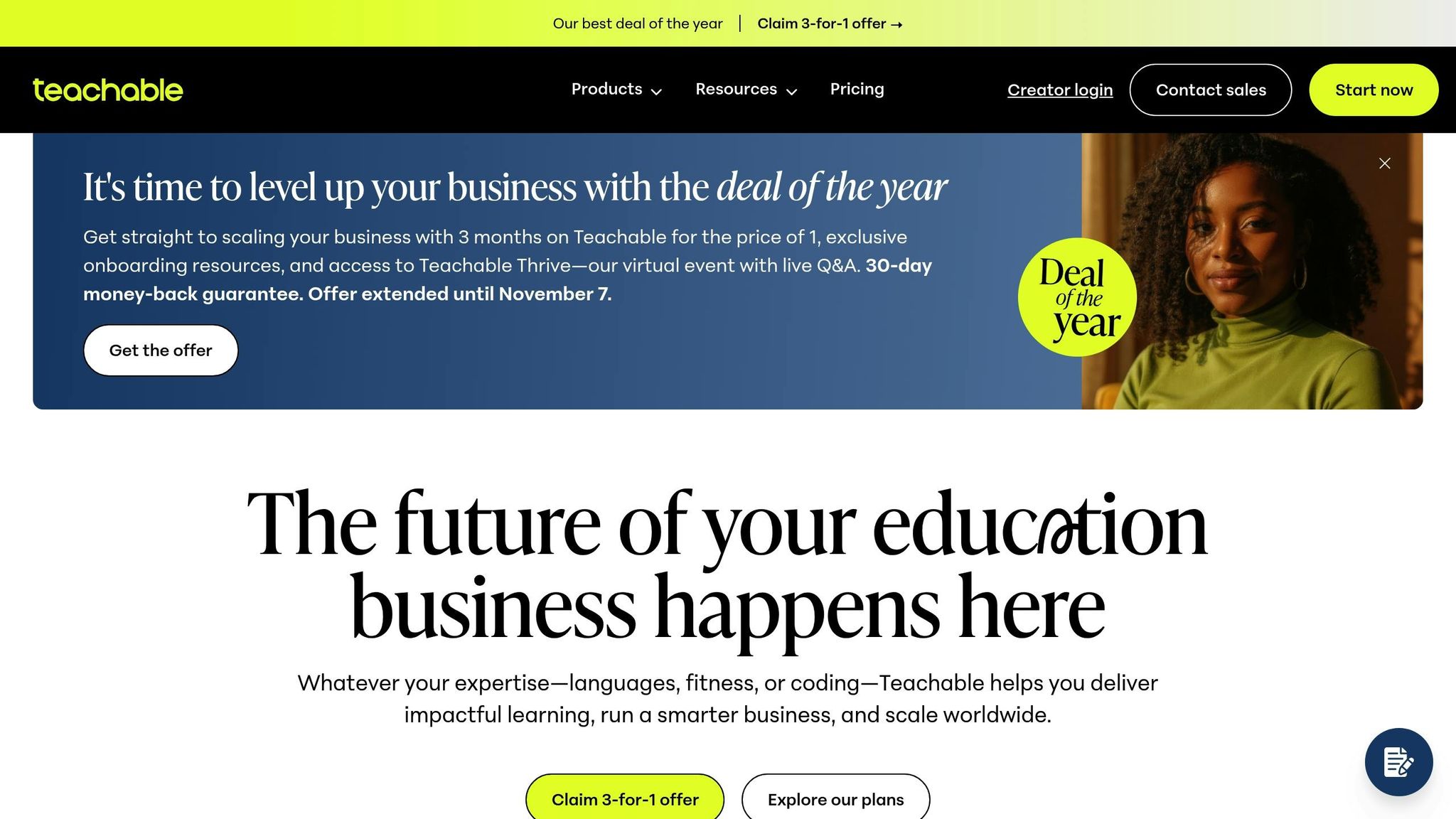
4. Teachable
Teachable is an online course platform designed to take the hassle out of managing website infrastructure. By handling updates and backups automatically, it frees up course creators to focus on producing engaging learning materials. This streamlined approach allows users to dive straight into creating without worrying about the technical side.
Supported Content Types
Teachable’s drag-and-drop course builder makes it easy to include a variety of content formats, such as videos, quizzes, downloadable resources, and interactive surveys. It even features an AI-powered tool that can generate a course outline based on just a title and description. Users can customise their courses with two main templates – Simple and Colossal – and a flexible page builder. While the template options are limited, they help maintain consistent branding across courses.
Integration with Tools
Teachable integrates seamlessly with tools commonly used in apprenticeship programmes. For instance, it works with Mailchimp for email marketing, Zapier for automating workflows, Google Analytics for tracking learner performance, and Zoom for live virtual sessions. Additionally, built-in email marketing features and automatic sales page generation make it easier to promote courses and manage enrolments.
Collaboration Features
The platform supports multiple instructor accounts, making it ideal for teamwork. Trainers, subject matter experts, and mentors can collaborate on course management, review submissions, and provide structured feedback using built-in assessment tools. While it doesn’t offer real-time editing, features like discussion forums and comment sections encourage interaction between apprentices and trainers, creating opportunities for peer learning and mentorship.
UK-Specific Pricing
For users in the UK, Teachable’s basic plan starts at around £145 per year. This straightforward pricing model is especially helpful for organisations running multiple apprenticeship programmes, as it covers hosting, course creation, and marketing features without adding extra costs for technical maintenance.
Advantages and Disadvantages
When evaluating tools for creating content in digital apprenticeships, it’s important to weigh their strengths and limitations. Each platform has its own set of features that cater to specific needs, but they also come with certain drawbacks.
Camtasia stands out with its professional screen recording capabilities and interactive features like quizzes and clickable hotspots. However, it can be tricky to master, especially for those with limited video editing experience. Its high price tag might also deter users working with smaller budgets.
Canva is celebrated for its user-friendly interface and a vast library of templates. It supports teamwork through real-time collaboration and shared folders, making it ideal for group projects. That said, it lacks the advanced tools required for managing courses and assessments, which are often essential for formal digital apprenticeships.
Thrive Apprentice offers a flexible course creation experience with its visual editor and modular design. Its School Wizard provides step-by-step guidance, enabling users to launch branded courses without needing coding expertise. However, its reliance on WordPress knowledge and limited payment gateway options can make it less appealing for those looking for a standalone solution.
Teachable simplifies course delivery by automating technical tasks like sales page creation and using AI to help structure course outlines. It allows trainers to focus on content, with features like discussion forums and email tools to encourage feedback. On the downside, it offers limited options for real-time collaboration, has restricted template customisation, and its pricing can be a barrier for some organisations.
Here’s a quick comparison of the platforms:
| Software | Key Advantages | Main Disadvantages | Collaboration Tools | Integration Capabilities | Annual Pricing (GBP) |
|---|---|---|---|---|---|
| Camtasia | Professional video editing, interactive features | Steep learning curve, expensive for beginners | Limited (single-user focus) | LMS exports, video platforms | ~£145 |
| Canva | Easy to use, extensive templates, team collaboration | Lacks advanced course management tools | Real-time editing, shared folders | LMS, social media, Google Drive | Free/~£100 |
| Thrive Apprentice | Flexible course structure, WordPress integration | Requires WordPress knowledge, limited payment options | WordPress roles, comments | Deep WordPress ecosystem | ~£150 |
| Teachable | Automated setup, AI tools, built-in marketing | Limited templates, restricted collaboration | Discussion forums, messaging | Zapier, email marketing, analytics | ~£330 |
Choosing the right platform depends on your organisation’s technical setup and the skills of your team. Matching the tool to your needs will help you deliver effective digital apprenticeships.
Conclusion
To wrap up our comparative review, let’s highlight some key takeaways. Choosing the right content creation software for digital apprenticeships means matching your organisation’s unique needs with the strengths of each platform.
Camtasia is ideal for organisations prioritising high-quality video and interactive learning. Its screen recording capabilities make it especially useful for technical apprenticeships that rely on step-by-step demonstrations. However, with an annual cost of £145 and a steeper learning curve, it’s better suited for established training providers with dedicated content teams.
Canva, on the other hand, is a great starting point for beginners. Its user-friendly templates and collaborative tools enable quick and easy visual content creation. That said, it lacks the structured course management features needed for formal apprenticeship programmes.
For organisations already using WordPress, Thrive Apprentice offers a flexible course design experience. Its visual editor and modular structure make it well-suited for apprenticeships requiring tailored learning pathways, particularly those aligned with specific standards.
Teachable shines as an all-in-one solution for training providers looking to minimise technical complexity. Features like AI-powered course outline generation and automation significantly reduce setup time, making it an appealing choice for organisations aiming to scale their apprenticeship offerings quickly.
AI integration is becoming increasingly relevant, especially for apprenticeships like NowSkills’ "Content Creator with Artificial Intelligence Tools Level 3 Apprenticeship". Platforms that incorporate emerging technologies will better equip apprentices with the skills needed in today’s workplaces.
Before committing, consider running a pilot programme to test the chosen tool. The ultimate goal is to select software that not only boosts learner engagement but also equips apprentices with practical skills and a portfolio that aligns with industry expectations.
FAQs
What should I consider when selecting content creation software for a digital apprenticeship programme?
When choosing content creation software for a digital apprenticeship programme, it’s important to prioritise tools that help build practical, job-focused skills in areas like digital marketing and content production. Look for software that is easy to use, commonly utilised in the industry, and equipped with features like multimedia editing, collaboration tools, and analytics capabilities.
The software should cater to the programme’s goals by encouraging hands-on learning and inspiring creativity. This approach ensures apprentices gain meaningful, industry-relevant experience, setting them up for future roles in the digital and IT sectors.
What are the costs of the content creation tools discussed in the article, and do they offer discounts for educational institutions?
When it comes to content creation tools, the options are diverse, and their features vary widely. Pricing can range from free versions with basic functionality to premium plans packed with advanced tools. Some platforms also offer discounts or special pricing for educational institutions, including schools, colleges, and training providers, so it’s worth checking for those opportunities.
For those diving into content creation through a digital apprenticeship, organisations like NowSkills offer accredited training programmes tailored to this field. These programmes blend hands-on teaching with practical, on-the-job experience, equipping apprentices and employers with essential skills for success in the digital world.
Do these content creation tools work with platforms commonly used in digital apprenticeships?
Many content creation tools are built to work effortlessly with the platforms and systems commonly used in digital apprenticeships. This compatibility allows apprentices to collaborate smoothly, share resources efficiently, and keep workflows organised throughout their training.
At NowSkills, the apprenticeship programmes are designed to provide hands-on expertise in areas such as Digital Marketing, Content Creation, and Data Analytics. These programmes are carefully aligned with industry expectations, ensuring that the tools and systems apprentices use are practical and directly applicable to real-world scenarios.


